
Elemek megjelenítése címkék szerint: Cyberbullying
Cyberbullying-Prevention, Intervention and Digital Wellbeing
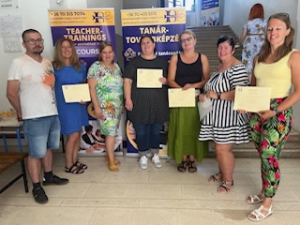
19-25 July 2026, Rovinj
Participating in the Erasmus+ course "Cyberbullying: Prevention, Intervention and Digital Wellbeing" in Rovinj, Croatia, was an inspiring and professionally rewarding experience. As this was my first Erasmus+ mobility, I was excited not only about the opportunity to improve my professional knowledge but also about meeting teachers from different European countries and learning from their experiences. Throughout the week, I had the chance to exchange ideas with colleagues who face similar challenges in their schools, despite working in different educational systems and cultural environments.
The course focused on one of the most important issues affecting young people today: cyberbullying and the promotion of digital wellbeing. The programme successfully combined theoretical knowledge with practical activities, making every session engaging and relevant. Instead of simply listening to lectures, we actively participated in discussions, group work, role-playing activities, case studies and reflective exercises. This interactive approach allowed us to analyse real-life situations, share our own experiences and work together to find effective solutions.
One of the strongest messages of the course was that cyberbullying is much more than an online conflict between students. It can have serious emotional and psychological consequences, including anxiety, loneliness, shame, stress and a loss of self-confidence. Through empathy-building activities, we were encouraged to see situations from the victim's perspective and understand how difficult it can be for young people to ask for help. These exercises reminded me that teachers should always look beyond students' behaviour and pay attention to the emotions that may be hidden behind it.
During the training, we explored the many forms of cyberbullying, including offensive messages, online exclusion, fake social media accounts, manipulated images, privacy violations and the rapid spread of rumours on digital platforms. One important lesson was that cyberbullying often continues long after the school day has ended. Since young people are connected to digital devices almost constantly, they may feel that there is no safe place where they can escape from online harassment. This highlighted the importance of creating a school environment where students feel safe, respected and confident enough to report problems.
Several practical activities helped us understand how schools can respond effectively to cyberbullying. One of the most memorable sessions involved a realistic case study in which a student's Instagram photo had been stolen, digitally manipulated and shared without permission. Working in international groups, we developed a complete intervention plan. We discussed the importance of preserving digital evidence, informing school leaders and parents, providing emotional support for the victim, applying appropriate disciplinary measures, reporting harmful content to online platforms and, when necessary, involving external authorities such as the police. This activity clearly demonstrated that dealing with cyberbullying requires cooperation between teachers, school management, families and other professionals.
I also appreciated the opportunity to learn practical classroom strategies that can be used immediately. Activities such as the Dixit card discussions, the "Empathy Detective" game and the "Gossip Game" showed how simple methods can encourage students to think critically, communicate openly and develop empathy for others. I particularly liked the "Red Cards" idea, which encourages students to recognise inappropriate online behaviour before it becomes a more serious problem. These methods are easy to adapt for different age groups and can easily be integrated into both English lessons and class teacher sessions.
Another important part of the course focused on teenagers' digital lives and the challenges they face every day. We discussed the influence of social media, online games, messaging platforms and artificial intelligence on young people's behaviour and wellbeing. Special attention was given to issues such as online grooming, sextortion, manipulated images, body image pressure and digital addiction. These discussions made me realise that digital citizenship is no longer an optional topic but an essential life skill that schools need to teach systematically.
One of the final collaborative tasks was the creation of a School Cyberbullying Checklist, which included the key elements of an effective school prevention strategy. Together we identified the importance of clear school policies, confidential reporting channels, well-defined intervention procedures, regular teacher training, parent education programmes and continuous student awareness activities. I believe this checklist can serve as a practical tool in my own school and help us strengthen our existing safeguarding procedures.
Beyond the professional content, the international dimension of the course was equally valuable. Working together with teachers from different countries gave me new perspectives on education and reminded me that, although our school systems may differ, we all share the same goal: creating a safe and supportive learning environment where every child feels respected and protected. Listening to colleagues' experiences broadened my understanding of different approaches to prevention and intervention and inspired me to reflect on my own teaching practice.
The course also strengthened several personal and professional competences. I improved my communication skills by working in English throughout the week, gained confidence in participating in international discussions and developed my ability to collaborate in multicultural teams. These experiences have motivated me to continue participating in international professional development opportunities in the future.
After returning to my school, I plan to share the knowledge and practical ideas I gained with my colleagues through an internal workshop. I also intend to integrate many of the activities into my English lessons and class teacher sessions, where topics such as online safety, responsible digital behaviour and empathy naturally fit into classroom discussions. In addition, I would like to introduce practical resources developed during the course, including the School Cyberbullying Checklist and an Emergency Digital First Aid Kit for Teachers, which can provide immediate guidance when cyberbullying incidents occur.
Overall, this Erasmus+ mobility was a highly valuable professional experience. It expanded my knowledge of cyberbullying prevention, increased my confidence in responding to online safety issues and provided me with practical methods that I can immediately apply in my daily work. At the same time, it reminded me that education is not only about teaching academic subjects but also about helping young people become responsible, respectful and digitally aware citizens. I am confident that the knowledge and inspiration I gained during this course will have a lasting positive impact on both my teaching practice and my school community.
Cyberbullying - Malaga, Spain

CYBERBULLYING
Málaga, Spain – December 4-8, 2023
When we first arrived, our Spanish trainer, Manolo, warmly welcomes us and introduced himself and then asked each participant to briefly introduce himself or herself. Participants’ countries were Poland, Hungary and Croatia. We were introduced with a platform called Padlet where the timetable and the Info Pack were uploaded which we had had received before our mobility to get familiar with what we were going to see and do. Padlet became the location where we needed to do our assignments including writing a paragraph and uploading a photo introducing ourselves, uploading presentations about our schools, reporting each day’s activities including photos, and writing down some notes from the activities we had during the course comparing bullying with cyberbullying. On the second day, the trainer chose to have the outdoor activity instead of the third day which turned out to be a good idea. Although for some reason, the application Action bound for scavenger hunt did not function on his phone, but we had a very nice and informative walk through Malaga including a hike to the hill where the castle remains were there to enjoy the picturesque scenery of Malaga beach and port. Manolo was ready to explain all about the history of the places and tried to answer questions that we had about different things. He helped us to find a local restaurant to experience the cuisine that the locals have. We also tried to get familiar with some basic Spanish. During the trip, we exchanged experiences about Erasmus+ which added value to our outdoor cultural activity. From day 3 and onwards, we had a more thorough examination into the course including practical works, different cyberbullying case scenarios where we worked in pairs, sharing best practices in bullying prevention and response, defining what is bullying and characterizing the bully and the victim. Bullying is hurtful, repetitive, intentional and always happens when there is power imbalance. Cyberbullying is one of the forms which uses the digital technologies to harass, intimidate, or humiliate others. This can be in public or in private. Bystanders’ role was also mentioned to be a very important asset. Detection is the first step where the role of parent-teacher communication was discussed to be of an essence for collaboration. My personal favorite was having anonymous reporting systems in the school. Among the thirteen actions that can be taken, documenting the evidence stood out for me to implement. A highlight was for me when listing the different forms of bullying was that many times it can be as simply as giving silent treatment to a student where classmates choose not to talk or deal with a certain student. Another crucial point which was discussed and worth having a workshop in the sending organization was about school programs and policies in bullying prevention. Several apps and websites, like Rethink app, Anti-bullying measures on Instagram, Anti-Bullying Alliance among others were introduced as resources to further our knowledge and preparedness against cyberbullying. Finally, discussions about future cooperation and follow up activities were made along with exchanging contact information and receiving our certificates.
A spanyol életérzés és a gyönyörű Valencia

2022. május elején egyhetes Erasmus+ kurzuson vehettem részt Spanyolországban, a festői szépségű Valenciában. Ez alatt az egy hét alatt nemcsak életreszóló élményekkel, hanem hasznos, a mindennapi munkám során is alkalmazható tudással gazdagodtam.
A továbbképzés a Preventing and Intervening in (Cyber)bullying címet viselte, és a mai világban egyre inkább teret nyerő iskolai bántalmazások megelőzési és kezelési technikáinak bemutatására irányult. Több országból is érkeztek részvevők: 3 olasz, 3 francia, 2 német, 2 bolgár és 3 román nemzetiségű kollégával együtt vettünk részt az előadásokon, melyek a délelőtt folyamán kerültek megtartásra. A kurzus különlegességét többek között az adta, hogy első alkalommal került megrendezésre, így tulajdonképpen premier előadáson vehettünk részt.
A kezdeti warm-ups után, minden részvevő röviden bemutatta az iskoláját és a hazáját, ahonnan származott. Egyedülálló élmény volt ennyi különböző kultúrába egyszerre bepillantást nyerni! Az előadásokon elsősorban a témakör legfontosabb alapfogalmairól esett szó, majd az online világban is egyre nagyobb mértékben teret öltő bántalmazásról. A különböző szereplők feladatairól is beszélgettünk: mit tehetnek az iskolák, a tanárok, a pszichológusok, a szülők és maguk a gyermekek, hogy megelőzzék az iskolai bántalmazásokat, illetve hogy megfelelően kezeljék azokat, ha már megtörténtek. A kurzusoktató mindvégig törekedett arra, hogy interaktívvá tegye az előadásokat, ezért az elméleti részeken felül különféle játékokkal, filmrészletekkel, zenével vagy éppen árnyjátékkal tette érdekessé a foglalkozásokat.
A kurzusszervező 2 fakultatív programlehetőséggel is kedveskedett számunkra, melynek keretei között az impozáns katedrálist, a festői szépségű Monforte kertet, a Museu de Belles Arts de València művészeti galériát, a szemet gyönyörködtető tengerpartot és a szebbnél szebb színekben pompázó El Cabanyal városnegyedet lehetett megtekinteni.
Csodálatos egy hetet töltöttem Valenciában, amely minden szempontból az egyik legkülönlegesebb, legszebb és legsokoldalúbb város, amelyet valaha láttam. A rengeteg parkosított terület, köztük Spanyolország legnagyobb városi parkja, a Túria park, nem csupán kikapcsolódási, hanem sportolási lehetőséget is nyújt az ott lakóknak és oda érkezőknek: soha ennyi embert nem láttam még napközben sportolni, futni és táncolni, mint Valenciában! Az egész városban remekül kiépített kerékpárút és a jó áron bérelhető biciklik lehetővé teszik a különböző városrészek könnyű és gyors megközelítését, arról nem is beszélve, hogy a kerékpárutak menti látvány még a gyakorlott utazók számára is szemet gyönyörködtető: pálmafák, parkok és impozáns épületek vannak, amerre csak a szem ellát.
Valenciában a régi és az új találkozása számos téren megmutatkozik: a gótikus stílusú ikertornyok és az ultramodern Művészetek Városa természetes szépséggel megfér egymás mellett, és ezen kettősség szinte megbabonázza az odalátogatókat. Ezen kettősség a lakónegyedekben is felfedezhető, ahol órákig el tud bóklászni minden kíváncsi járókelő.
Végül, de nem utolsó sorban a spanyol kulináriába is belekóstolhattam, mely teljes mértékben elnyerte a tetszésem. Ízletes paellát, különféle tapasokat és a híres Horchata italt is megkóstolhattam, mely utóbbit érdekes ízvilága miatt csak a legnagyobb ínyenceknek ajánlanám. Aki idelátogat, feltétlenül térjen be Valencia legnagyobb piacára, a Mercado Centralba, ahol nemcsak gyönyörködhetünk mindenféle földi jóban, hanem a vendégszerető árusoknak köszönhetően meg is kóstolhatjuk a különleges sajtokat, sonkákat, olajbogyókat és a mézédes spanyol narancsot is.
Összességében felejthetetlen élményeket szereztem az első Erasmus+ kurzusomon, ahol nemcsak hasznos tudással gazdagodtam és új ismeretségeket szereztem, hanem a spanyol életérzésbe és kultúrába is belekóstolhattam, festői tájakban és művészeti alkotásokban gyönyörködhettem egy zöld városban, ahol minden a szépségről szól. ¡Y viva España!
Tanártovábbképzés külföldön - pályázattal