
Cyberbullying: Prevention, Intervention and Digital Wellbeing
Rovinj, 2026.07.18-25.
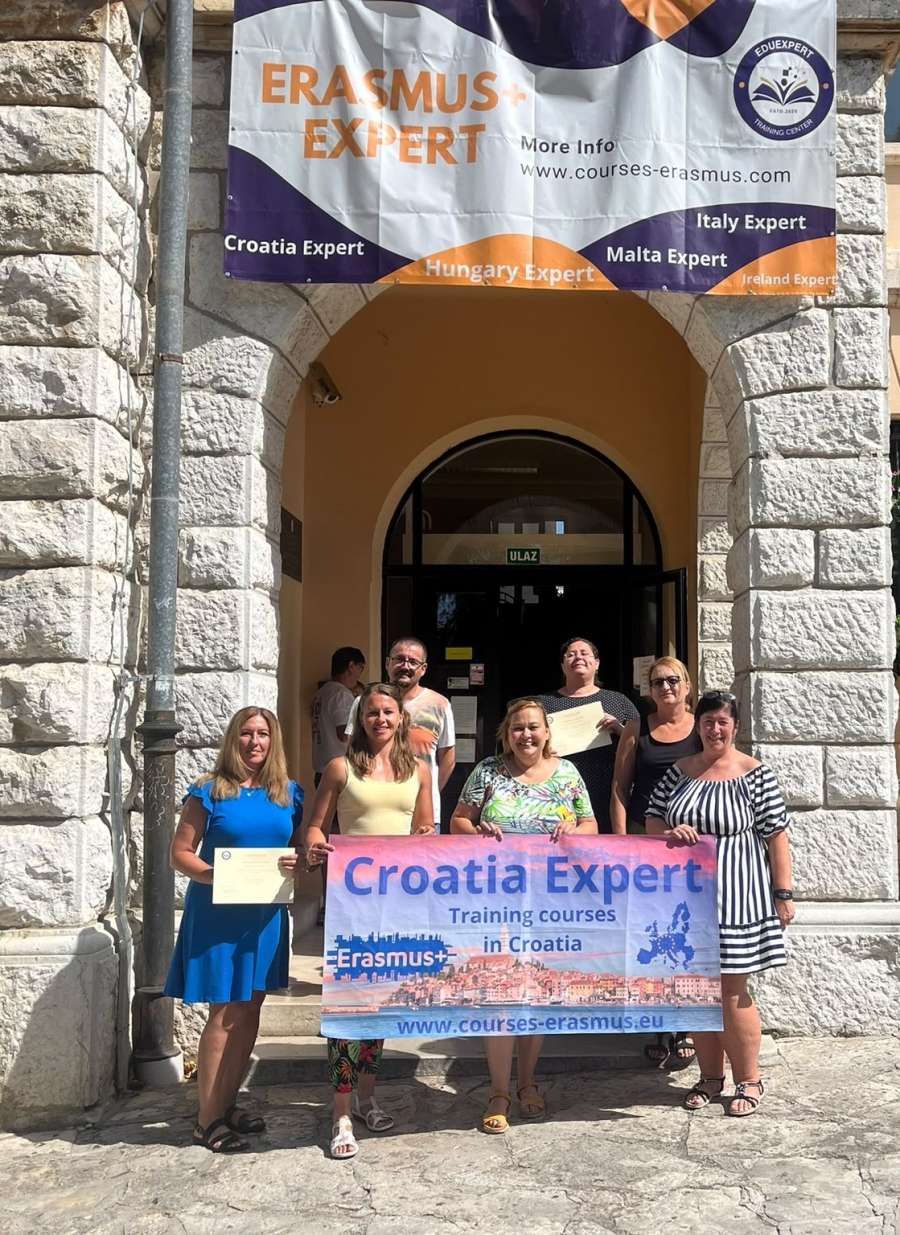
As part of the Erasmus+ programme, I participated in a teacher training course in Rovinj, Croatia, for the third time. I chose the course “Cyberbullying – Prevention, Intervention and Digital Wellbeing”. The selection of this specific course was highly motivated by the increasing prevalence of cyberbullying within the school environment. Managing and eliminating online harassment is a complex pedagogical challenge that requires thorough, proactive preparation. Preventing the emergence of these harmful digital behaviours is far more effective than reactive crisis management, and it successfully demands close, structured cooperation between educators, students, and parents .
The course provided a comprehensive overview of the psychological and social mechanisms behind cyberbullying and helped us examine the motivations, opportunities and limitations of the different people involved. The core content of the course focused on the recognition, prevention, and safe management of online risks and cyberbullying, highlighting how digital interactions differ fundamentally from offline relationships. We explored typical forms of online aggression, including harassment, impersonation, exclusion and the spreading of harmful content. Particular attention was given to the role of teachers in recognising warning signs, preventing harmful behaviour and responding to incidents professionally. Digital footprints, privacy, social media dynamics and digital citizenship were also important topics. The curriculum was implemented through a well-structured daily schedule that combined theoretical input with experiential learning and collaborative group work
A strong practical focus made the training especially useful for my everyday teaching practice. We worked with real-life cases, watched awareness-raising videos and used interactive activities and simulations to explore different perspectives. Among the activities were tasks for distinguishing ordinary conflicts from bullying, the “Secret Agent of Empathy” activity, the “Whispering Chat” and “Staffroom Crisis” simulations, and the App Mapping Grid, through which we identified students’ knowledge of different applications and considered their potential risks. These methods demonstrated how complex issues can be addressed in an engaging and age-appropriate way.
An important outcome of the course was the development of practical resources. Working in groups, we created elements of a school Cyber Safety Action Plan and an Emergency Digital First Aid card. We also explored protocols for reporting and responding to cyber incidents and discussed how parents can be supported in recognising and dealing with cyberbullying affecting their children.
The knowledge and materials gained during the mobility can be directly integrated into our school’s existing bullying-prevention programme. I intend to share the newly acquired methods and resources with colleagues and use selected activities in my own classes, particularly in digital culture and ethics lessons. The materials can also support discussions with students about responsible online behaviour, privacy, digital footprints, empathy and digital wellbeing.
The mobility therefore contributed not only to my professional development but also to the wider digital safety culture of our school. It strengthened my confidence in recognising and addressing cyberbullying and provided practical, transferable tools for prevention and intervention. Most importantly, it reinforced the idea that creating a safe digital environment is a shared responsibility of the whole school community.
Tanártovábbképzés külföldön - pályázattal